Recruitment is often judged subjectively: vacancies “are being filled” or “are not”, candidates are “strong” or “weak”, the team “works well” or “slowly”.
But this approach gives no real understanding of how effective the process is. Especially in companies where hiring directly affects business growth.
To manage recruitment, you have to measure it. That is what KPIs are for.
Let's look at the key recruiter performance indicators and how to interpret them correctly.
1. Time to fill
This is one of the basic recruitment metrics.
It shows how much time passes from opening a vacancy to the candidate's first day at work.
Why it matters:
- it reflects the recruiter's speed;
- it shows how efficient the approval process is;
- it depends on the market and the employer;
- it directly affects the company's business processes.
But it is important to understand that a long time to fill does not always mean poor recruiter performance. Sometimes it is the result of inflated requirements or a shortage of specialists on the market.
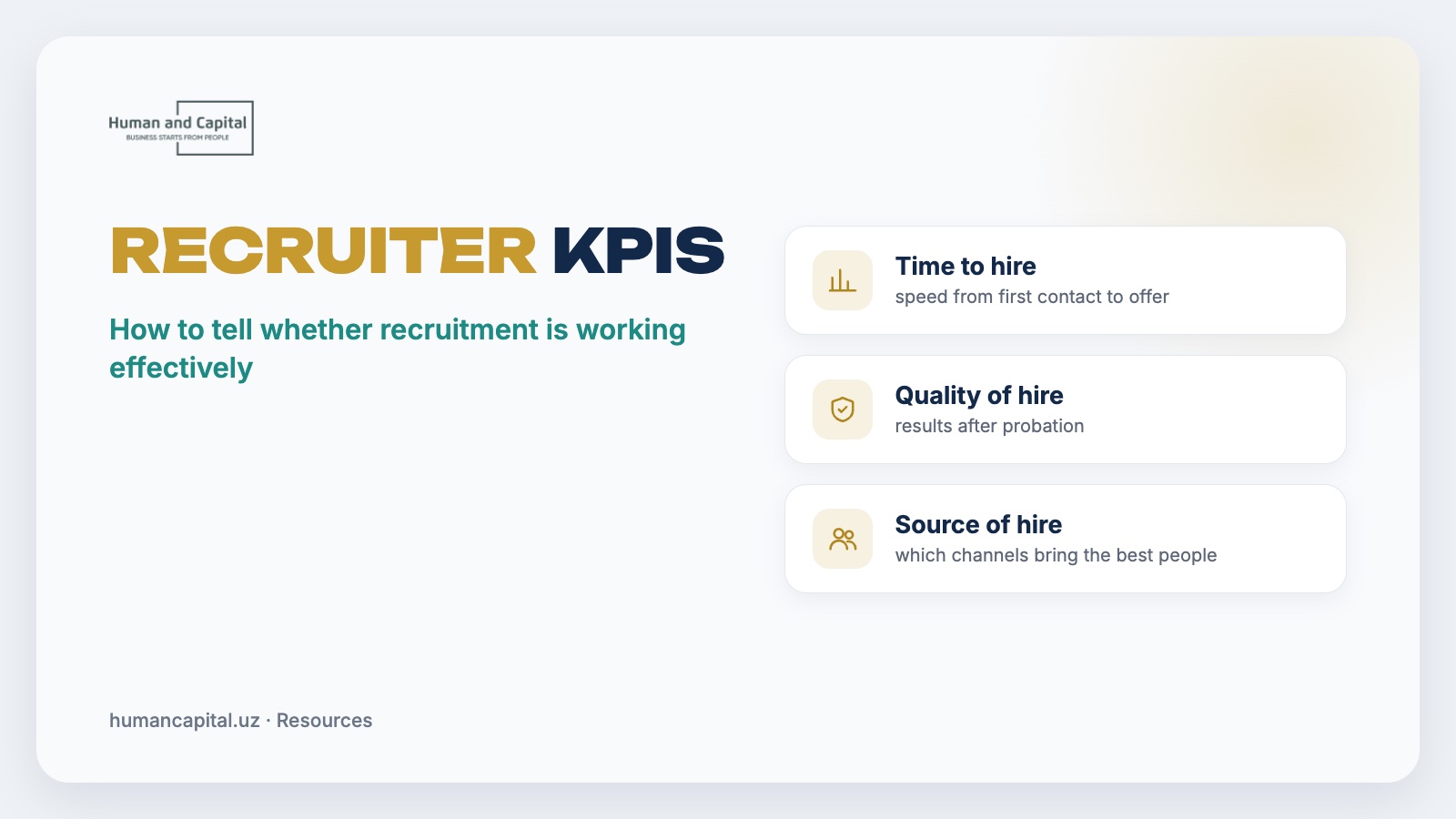
2. Time to hire – from first contact to offer
This KPI reflects the recruiter's work more precisely.
It shows how quickly a candidate goes through the path:
first contact → interview → offer.
If this figure is high, the reasons may be:
- slow approval processes;
- a long chain of interviews;
- weak communication with candidates;
- an unstructured hiring process.
3. Offer acceptance rate
This metric shows how willing candidates are to accept the company's offers.
If offers are often declined, it signals possible problems:
- an uncompetitive salary;
- a drawn-out hiring process;
- a weak employer brand;
- poor communication with the candidate;
- mismatched expectations.
A high rate means the recruiter not only finds candidates but also “sells” the vacancy well.
4. Quality of hire
One of the most difficult but most important KPIs.
It shows how successfully the new employee performs after starting.
It is assessed through:
- performance in the role;
- passing probation;
- the manager's evaluation;
- engagement at work;
- turnover.
If an employee leaves quickly or cannot cope with the tasks, it may point to problems at the selection stage.
5. Cost per hire
This KPI shows how much the company spends to fill one vacancy.
The calculation may include:
- the recruiter's salary;
- the cost of job postings;
- access to CV databases;
- agency services;
- managers' time;
- sourcing tools.
It is important to take into account not only direct but also indirect costs.
6. Source of hire
This metric shows which channels bring the best candidates.
For example:
- LinkedIn;
- employee referrals;
- job sites;
- Telegram;
- the candidate database;
- direct search.
If most high-quality candidates come from one channel, it is worth investing more in it.
7. Conversion rate across selection stages
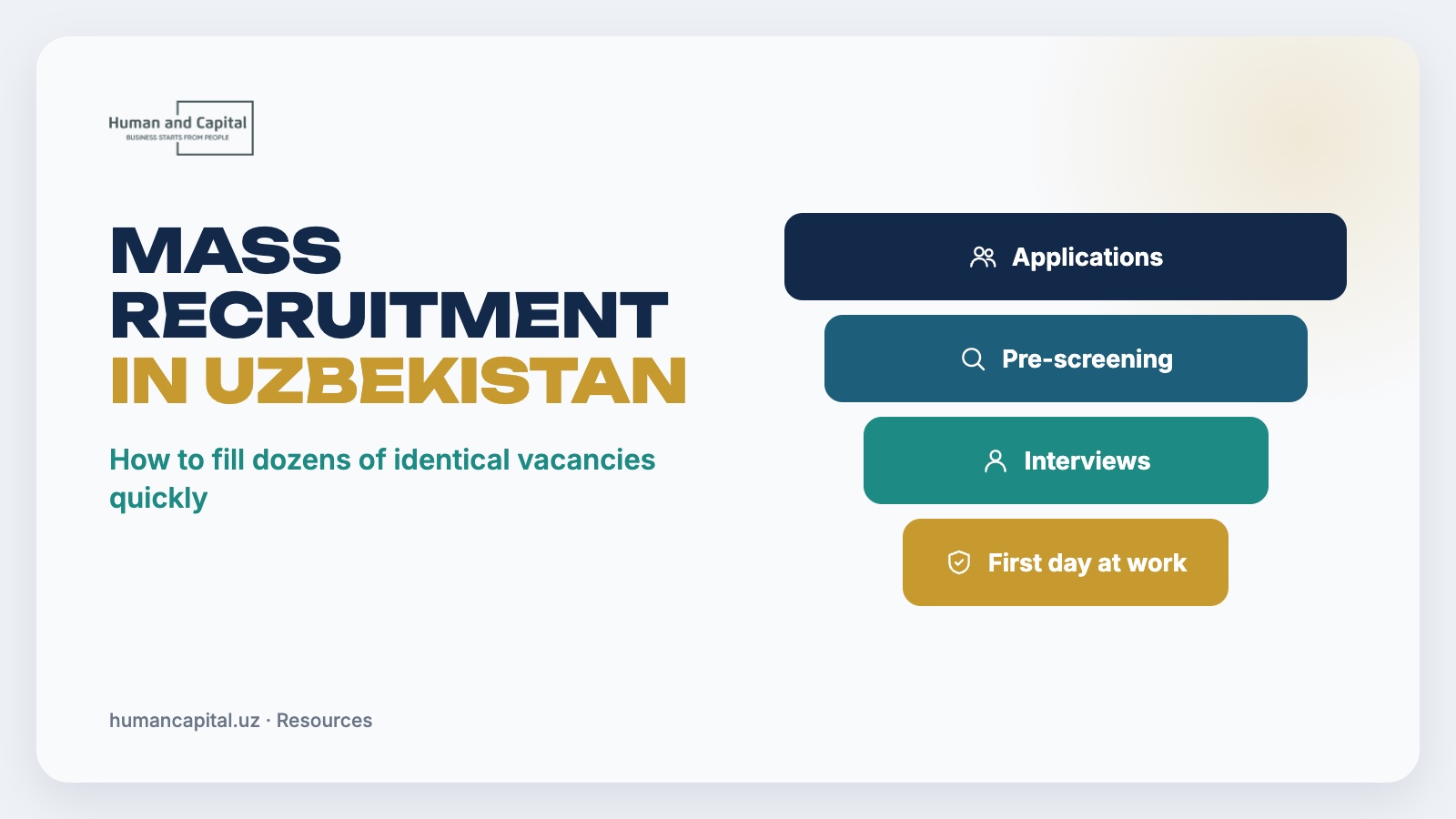
This KPI shows how effectively the hiring funnel works.
The stages usually analysed are:
- application → screening;
- screening → interview;
- interview → offer;
- offer → start.
If there is a sharp drop in candidates at some stage, that is where the problem is.
8. Retention rate
Although this metric is often attributed to HR in general, it is directly linked to recruitment.
If employees often leave within the first 3–6 months, it signals:
- the wrong hire;
- a weak assessment of motivation;
- mistakes at the interview stage;
- mismatched expectations.
Good recruitment does not end with an offer – it ends with successful onboarding.
9. Hiring manager satisfaction
One of the most underrated KPIs.
It shows how satisfied managers are with the recruiter's work.
It is assessed through:
- the quality of candidates;
- the speed of filling vacancies;
- communication;
- understanding of the requirements;
- transparency of the process.
Even if the speed metrics are good, low hiring manager satisfaction points to problems with the quality of selection.
10. Candidate experience
Modern recruitment is increasingly focused on the candidate experience.
What is assessed:
- how comfortable the process is;
- how quickly feedback is given;
- whether communication is clear;
- how candidates rate the interviews.
A poor experience can not only spoil a hire but also affect the company's employer brand.
Why KPIs should not be viewed in isolation
The main mistake is to judge a recruiter by a single metric.
For example:
- fast hiring ≠ quality hiring;
- low cost ≠ a good result;
- a large number of applications ≠ successful recruitment.
Recruitment effectiveness is always multidimensional.
What a healthy KPI system looks like
In mature companies recruiter KPIs are a balance of:
- speed (time to hire);
- quality (quality of hire);
- efficiency (conversion rate);
- client satisfaction (hiring manager satisfaction);
- cost (cost per hire).
Only together do they give a real picture.
In conclusion
Recruitment KPIs are not a control tool but a management tool.
They help you understand:
- where candidates are lost;
- why vacancies are filled slowly;
- which channels work better;
- how good the hires are;
- where the process needs improvement.
Good recruitment is not only about filled vacancies but about predictable results.
KPIs are what turn recruitment from a chaotic process into a managed system that consistently provides the business with the right people.
Learn more about our recruitment service.