Opening a new contact centre, branch or store means hiring dozens of people for the same roles within a few weeks. Classic recruitment, where each vacancy is handled separately, does not work here: you need a flow of candidates, quick decisions and a clear process. Let's look at how mass recruitment works and where time and people are most often lost.
What mass recruitment is
Mass recruitment means hiring a large number of employees for similar roles in a short time. It is most often needed by:
- contact centres and BPO projects – operators and support specialists, including those with foreign languages;
- retail – sales assistants, cashiers, warehouse staff;
- manufacturing and logistics – workers, drivers, pickers;
- restaurants and hotels – waiters, cooks, front desk staff.
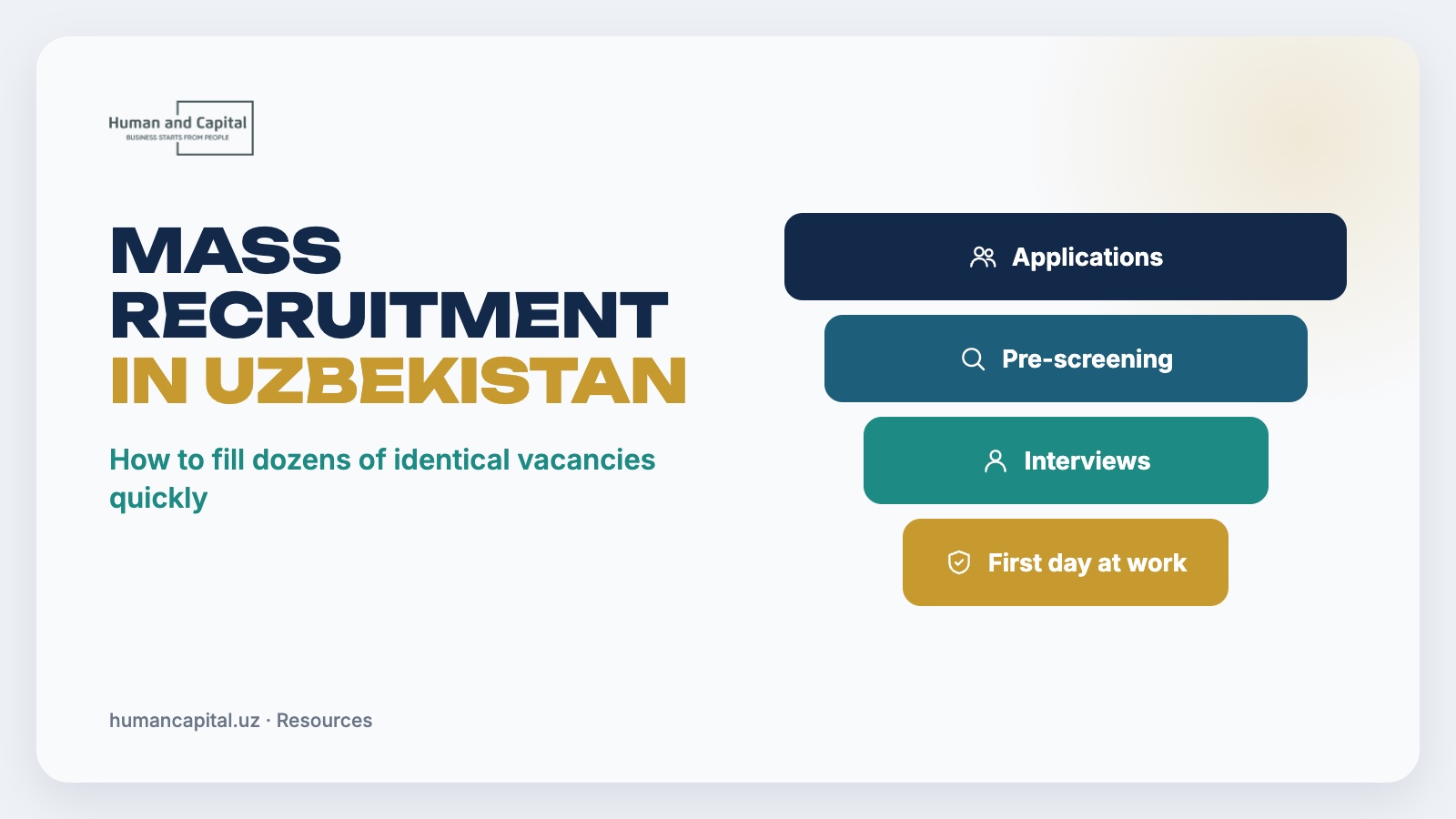
The main difference from individual recruitment is working with a funnel. What matters is not that every candidate is perfect, but how many people start work on time and stay after probation.
The process step by step
1. Describe the candidate profile
Choose 3–5 must-have criteria: for example, language level, readiness for shift work, clear speech. Everything else is nice to have. The longer the list of must-haves, the narrower the funnel and the longer the search.
2. Calculate the funnel
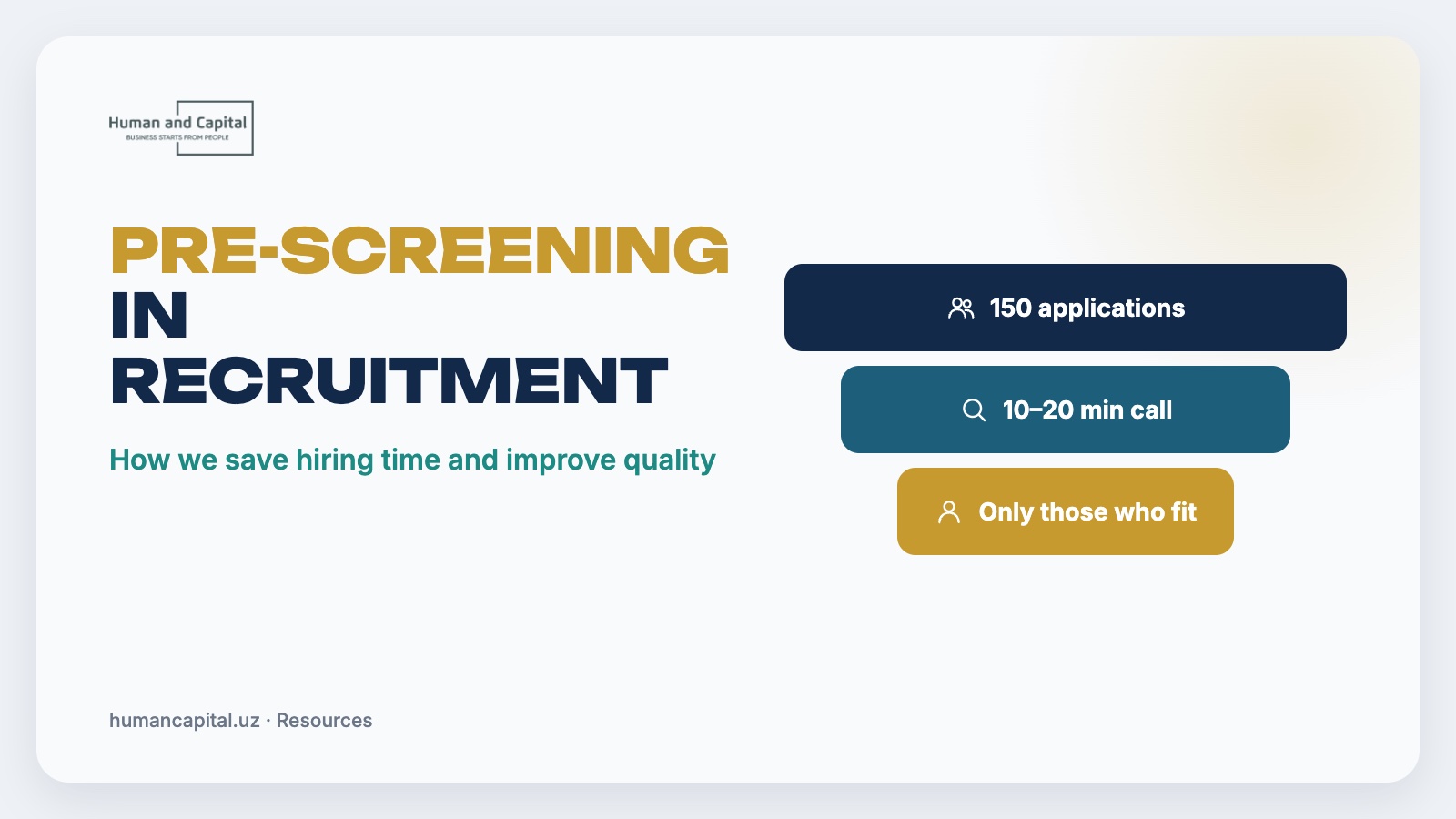
Work out how many applications you need for one person to start work. For example, if 4 out of 10 applicants come to an interview, 2 get an offer and 1–2 start work, hiring 30 employees will take around 150–300 applications. This is an illustrative example: real numbers depend on the role and the conditions. The calculation immediately shows whether your channels and budget are enough.
3. Use several channels
- job sites;
- Telegram channels and job chats for the city and district;
- referrals from current employees;
- colleges, universities and language centres – for entry-level roles and language projects;
- the agency's own candidate database.
Focus on the channels where your audience actually is, and track which of them bring people who start work, not just people who apply.
4. Make applying quick and easy
In mass recruitment candidates apply to several companies at once and choose the one that replies first. A short form instead of a mandatory CV, applying via Telegram and a call within a day noticeably increase the share of people who reach the interview.
5. Run phone pre-screening
A short scripted call checks the must-have criteria: schedule, salary expectations, language level, readiness to start on the required date. This way only people who really fit come to in-person meetings.
6. Use group interviews
Group meetings or assessment days let you evaluate dozens of candidates in a few hours: present the company and the conditions, run short exercises and pick the strongest straight away.
7. Make offers quickly
It is best to share the decision on the day of the interview or the next day. Every day of waiting is a risk that the candidate accepts another offer. A reminder the day before the first working day reduces the number of no-shows.
8. Take care of onboarding
A large share of departures in mass hiring happens in the first weeks. A mentor, a clear training plan and feedback in the first days help you keep the people you worked so hard to find.
Metrics to track
- Time to fill – how many days pass from opening the vacancy to the employee's start.
- Stage conversion – where the funnel loses the most candidates.
- Channel effectiveness – where the people who start and stay come from.
- Probation pass rate – the main quality metric of mass hiring.
Common mistakes
- Too many must-have requirements for a frontline role.
- Slow replies to candidates after they apply or interview.
- The conditions in the job ad differ from reality – people leave in the first week.
- No channel tracking, so the budget goes where there are applications but no hires.
- Onboarding is left “for later”.
Mass recruitment for language projects
For contact centres and BPO projects with foreign languages, a language check – spoken and written – is added to the standard process already at the pre-screening stage. There are fewer such candidates, so direct search, work with language communities and your own database become especially important.
How an agency can help
Human and Capital fills mass positions for retail, BPO and manufacturing: we take care of sourcing channels, pre-screening, assessment and support until the employee's first day. If the staff also need to be employed, we offer outstaffing – legal employment, payroll and reporting.
Learn more on our recruitment page.